Thursday, February 26, 2015

Nursing Diagnosis

Nursing Diagnosis  
For Congestive Heart Failure


Possible Nursing Diagnosis

1. Decreased Cardiac Output
2. Excess Fluid Volume
3. Risk for Alteration in Electrolyte Balance
4. Activity Intolerance
5. Knowledge Deficient

Nursing Diagnosis and intervention


Potential problem
Related to
Goal
Outcome
Intervention
Decrease cardiac output
Decreased Contractility
1.Clear lung sounds

2.No shortness of breath

3.Absence of or reduced edema

Patient will maintains optimally compensated cardiac output

1. Administer or evaluated patient’s home compliance with prescribed medication.

2. Assess for complains of fatigue and reduced activity tolerance. Determine at what level of activity fatigue or exertional dyspnea occurs.

3. Weight patient daily at the same time and same scale.

Gullanick. M., & Myers. J. (2013). Nursing Care Plans: Nursing Diagnosis and Intervention. St. Louis, MI. Elsevier

Monday, February 23, 2015

Nursing Care

The role of nurses in the treatment of Congestive Heart Failure

The nurse have critical role to care for both inpatient and outpatient who is suffering from heart failure.  Nursing intervention for patient with heart failure should include
  • administration of medication and assessment 
  • assessment of fluid balance, strict input and output of fluid volume
  • weight patient daily at the same time and on the same scale
  • auscultation of lung sounds to detect an increase or decrease in pulmonary crackles
  • determining the degree of jugular vein distension
  • identification of evaluation of edema
  • monitor patient's pulse rate, blood pressure and hypotension due to dehydration
  • examination of skin turgor and mucous membranes for signs of dehydration
  • assessment for symptoms of fluid overload
The nurse should also educate the patient about lifestyle modifications. smoking cessation, salt, restriction, appropriate levels of exercise, regular follow up appointment, and self-monitoring for sign and symptoms are all important parts of patient's treatment plan.


Angelidou, D. (2010). Caring for the heart failure patient: contemporary nursing interventions. Hospital Chronicles. supplement 1-8.

Quagliett, A., Atwood, E., Ackerman, L., & Froelicher, V. (2000). Management of the patient with congestive heart failure using outpatient, home and palliative care. Progress in Cardiovascular Diseases. 43(3). 259-274.

Saturday, February 14, 2015

Treatment

Treatment for Congestive Heart Failure:

If you have Congestive Heart Failure, you doctor might tell you
  • To loss weight if you are over weight
  • To modified diet to low sodium diet
  • Start on some exercise program
  •  Will start on medication such as:
    • ACE Inhibitor: this medication is to help reduce sodium in your body. Where sodium is water will follow. To reduce the sodium will reduce fluid in the body, therefore will reduce possible edema and blood pressure.
    • Beta-Blocker: this medication is to help reduce your heart rate, but help your heart to have stronger contraction (squeeze), therefore will increase cardiac output

    End stage congestive heart failure patients may require aggressive treatments including:
    •  left ventricular assist devices (LVAD): is a mechanical pump that is implanted inside a person's chest to help a weakened heart ventricle pump blood throughout the body. Unlike a total artificial heart, the LVAD doesn't replace the heart. It just helps it do its job. 

    • implanted pump that helps increase the heart's ability to squeeze, or even heart transplantation.

Saturday, February 7, 2015

Sign and Symptoms

Sign and Symptoms:

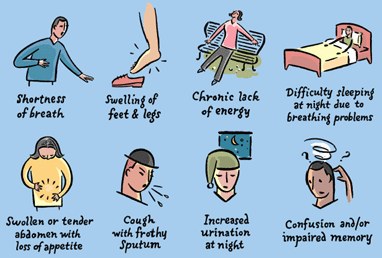
Early signs and symptoms of Congestive Heart Failure might not always notice or may have no symptoms at all. Sometimes people might dismiss the sublet symptoms, but generally early signs and symptoms of Congestive Heart Failure are:
  • Feel tired easily
  • Difficulty breathing when exerting
  • Feel weak and dizzy
  • Feel like the heart is pounding 
  • Persistent coughing
Late signs and symptoms of Congestive Heart Failure are:
  • Difficulty breathing when in rest
  • Waking during the night feel like choking
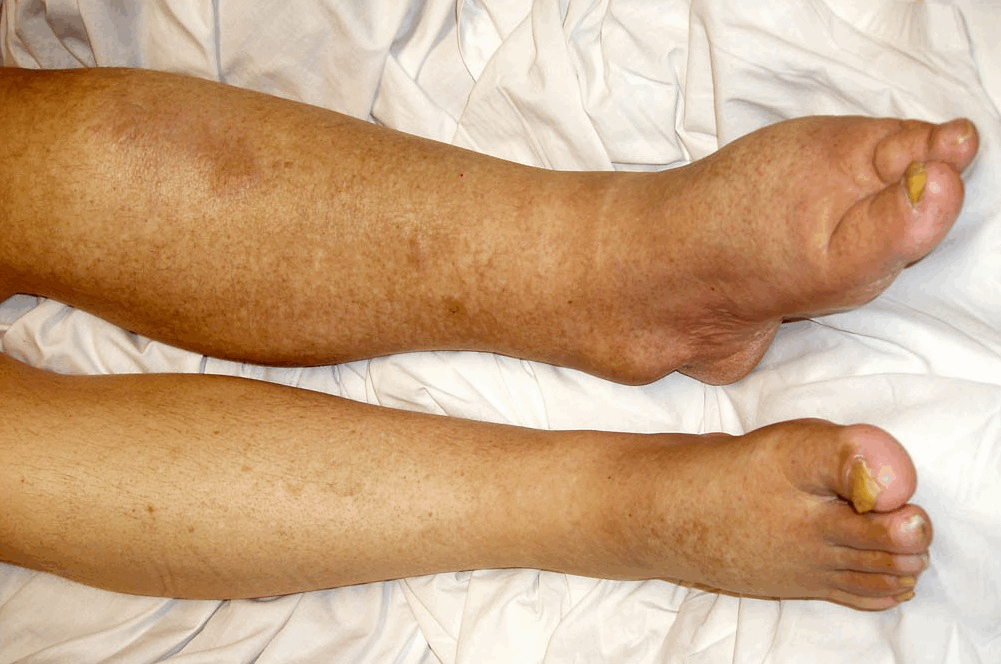
  • Swelling at the legs, ankles and feet from buildup fluid
  • Cough with white or pink blood tinge
  • Gain a lot of weight over night
  • Feel bloated or sick in the stomach
  • Lack of appetite


Congestive Heart Failure Symptoms, Causes, and Treatment. (n.d.). Retrieved February 7, 2015, from http://www.webmd.com/heart-disease/guide-heart-failure